
"branch levels"
2000 article(s) found

Characteristics of Columbia Coffee Bean producers Association introduction to the description of taste and flavor of Huilan Coffee Brand
Colombian boutique coffee beans introduce the variety of Colombian coffee is mainly small-grain coffee. Plants are small trees or large shrubs, 5-8 m tall, usually much branched at base; old branches gray-white, nodes dilated, young branches glabrous, compressed. Leaves thinly leathery, ovate-lanceolate or lanceolate, 6-14 cm long and 3.5-5 cm wide, tip long acuminate, acuminate part 10-15 mm long, base cuneate or

Introduction to the Andean Mountains in the main cultivated areas of coffee trees in Colombia
The main varieties of Colombian coffee are small grains of coffee. Plants are small trees or large shrubs, 5-8 m tall, usually much branched at base; old branches gray-white, nodes dilated, young branches glabrous, compressed. Leaves thinly leathery, ovate-lanceolate or lanceolate, 6-14 cm long and 3.5-5 cm wide, tip long acuminate, acuminate part 10-15 mm long, base cuneate or slightly obtuse, rarely rounded, entire or

Introduction to Fine Taste treatment of Coffee Bean Grinding scale varieties in Columbia Hope Manor
Columbia Hope Manor Coffee Bean Grinding scale varieties taste treatment boutique introduction Colombian coffee varieties are mainly small-grain coffee. Plants are small trees or large shrubs, 5-8 m tall, usually much branched at base; old branches gray-white, nodes dilated, young branches glabrous, compressed. Leaves thinly leathery, ovate-lanceolate or lanceolate, 6-14 cm long, 3.5-5 cm wide, tip long acuminate

A brief introduction to the Origin, Development, History and Culture of Fine Coffee beans in Huaguoshan, Yunnan Province
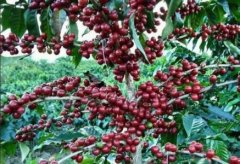
Berries broadly elliptic, red, 12-16 mm long, 10-12 mm in diameter, exocarp dura, mesocarp fleshy, sweet at maturity; seeds raised abaxially, ventral flat, longitudinally grooved, 8-10 mm long and 5-7 mm in diam. Direct branches are used for cutting materials during the flowering period from March to April, but not a branch, because the new plants grown after cutting with one branch can only grow creeping, not straight.

Description of flavor of Colombian Huilan coffee beans introduction of grinding scale in producing areas of varieties
Colombian Huilan Coffee Bean Flavor description Regional Grinding scale introduction to Colombian coffee varieties are mainly small-grain coffee. Plants are small trees or large shrubs, 5-8 m tall, usually much branched at base; old branches gray-white, nodes dilated, young branches glabrous, compressed. Leaves thinly leathery, ovate-lanceolate or lanceolate, 6-14 cm long, 3.5-5 cm wide, tip long acuminate

Small coffee Coffea arabica Linn Arabica coffee
Small coffee Coffea arabica L. Coffea arabica Linn. Sp. Pl. one hundred and seventy two。 1753; A. Cheval. Op. Cit. 196; A. E. Haarer, op. Cit. 13; Flora of Hainan 3: 349. 1974; Atlas of higher plants in China 4: 285, figure 5929. 1975; Tree Map of Yunnan, Volume 2: 1151. 1991. Small trees or large shrubs, 5-8 m tall

Varieties and flavors of coffee beans in Tanzania after roasting a jin of coffee beans
The SC9 yield is bright green, and many oily leaves can be used as shoots of seedlings. The length from branch to branch on the main trunk is about 6 inches. The length between flowers and flowers is 2 inches. It is resistant to CBD and CLR. The flavor is pleasant and suitable for sale (large bean shape, good appearance, attractive). The output is stable each season. The following table shows farmers' preference for coffee varieties.
The growing environment of coffee
Coffee is native to tropical Africa, the small seed is originated in the tropical plateau of Ethiopia, between 900 and 1800 meters above sea level, with an average annual temperature of 19C; the medium seed is native to the tropical rain forest region of the Congo, below 900 meters above sea level, with an average annual temperature of 2126. C

Introduction to the grindability of Colombian coffee beans and Arabica coffee beans by flavor description treatment
Colombian boutique coffee beans introduce Colombian coffee varieties are mainly small grains of coffee. Plants are small trees or large shrubs, 5-8 m tall, usually much branched at base; old branches gray-white, nodes dilated, young branches glabrous, compressed. Leaves thinly leathery, ovate-lanceolate or lanceolate, 6-14 cm long and 3.5-5 cm wide, tip long acuminate, acuminate part 10-15 mm long, base cuneate
A brief introduction to the cultivation of high-quality boutique coffee beans in Santa Rita Manor, geographical location, climate and altitude
Growing coffee also requires daylight and proper shade, which is most suitable for planting on fertile soil or volcanic ash soil. Therefore, the origin of coffee is widely distributed in South America, Central America, the West Indies, Asia, Africa, Arabia, the South Pacific and Oceania. Such as Ethiopia and Tanzania in Africa, Brazil, Colombia, Jamaica, Guatemala and Mexico in Central and South America.

Flavor description of Colombian Santa Rita Coffee introduction to the method of Variety treatment in Grinding scale production area
Columbia Santa Rita Coffee Flavor description Grinding scale production area Variety treatment introduction Arabica species (scientific name Coffee Arabica) have to be mentioned in Colombian coffee species. Arabica coffee trees grow between 900m and 2000 m above sea level; they are hardy, and the suitable growth temperature is 1524 ℃; they need more humidity, and the annual rainfall is not less than 1500 ml.

Coffee bean flavor of Santa Rita Manor in Colombia describes how to drink Santa Rita Manor Coffee
For the exchange of professional baristas, please follow the coffee workshop (Wechat official account cafe_style) Columbia Santa Rita Manor Coffee Coffee species introduction Colombian coffee varieties are mainly small grains. Plants are small trees or large shrubs, 5-8 m tall, usually much branched at base; old branches gray-white, nodes dilated, young branches glabrous, compressed. The leaves are thin leathery

Introduction to the planting Environment of Colombian Coffee grown in the Highland introduction to the production area of Fine Coffee Bean Coffee Manor
The main varieties of Colombian coffee are small grains of coffee. Plants are small trees or large shrubs, 5-8 m tall, usually much branched at base; old branches gray-white, nodes dilated, young branches glabrous, compressed. Leaves thinly leathery, ovate-lanceolate or lanceolate, 6-14 cm long and 3.5-5 cm wide, tip long acuminate, acuminate part 10-15 mm long, base cuneate or slightly obtuse, rarely rounded, entire or

The finals of the 2017 China baristas skills Competition in East China have been officially launched.
Today (April 22), sponsored by the Coffee Bean Branch of China Fruit Circulation Association and the China Coffee Culture Communication Center, the final of the 2017 China baristas skills Competition, sponsored by Suzhou Coffee and Western Food Industry Chamber of Commerce, was officially launched in Tongli, Wujiang. More than 130 contestants, judges, media and guests from East China witnessed this moment together. The Ministry of Commerce promotes the circulation industry.

Introduction to the Grinding scale of the Variety characteristics of Honduran Coffee Flavor description
Honduran Coffee Flavor description treatment Variety characteristics production area Grinding scale introduction Honduran Coffee has a good reputation and is suitable for mixed coffee. Coffee in Honduras is imported from El Salvador. Honduras produces high-acid high-quality coffee. Like other places, the coffee grade in Honduras depends on altitude: at 700 to 1000 meters above sea level

Grinding scale of Colombian coffee beans introduction to the taste of manor with variety treatment method
The main varieties of Colombian coffee are small grains of coffee. Plants are small trees or large shrubs, 5-8 m tall, usually much branched at base; old branches gray-white, nodes dilated, young branches glabrous, compressed. Leaves thinly leathery, ovate-lanceolate or lanceolate, 6-14 cm long and 3.5-5 cm wide, tip long acuminate, acuminate part 10-15 mm long, base cuneate or slightly obtuse, rarely rounded, entire or

Elegant fragrance of Sanrita estate fine coffee beans grinding degree roasting treatment method
Vietnam now produces more coffee than Colombia in Asia, and Indonesia has grown to become the world's fourth largest coffee producer. In 1721, French naval officer Gabriel Mathieu de Clieu took the first coffee sapling from Africa to Martinique in Latin America. All this is Latin American coffee

High quality Sanrita estate coffee beans grinding degree roasting degree processing method
Growing coffee also requires sunlight and proper shade, and is best done on fertile or volcanic ash soil. Therefore, coffee is widely distributed in South America, Central America, West Indies, Asia, Africa, Arabia, South Pacific and Oceania. Ethiopia and Tanzania in Africa, Brazil, Colombia, Jamaica, Guatemala and Mexico in Central and South America
Which is more advanced among Phoenix single fir, Chinese cabbage or narcissus? Which tastes better?
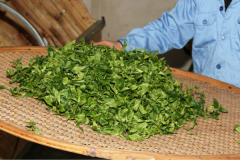
Single fir tea tree is a biological term. Single means single, and fir means tree or shrub. According to Wikipedia, single fir refers to the form of tea trees. Most tea trees emerge from the ground to form a cluster of branches; however, a rare Dan clump variety appears as a single trunk with higher branches. Once a tea tree is found to have a unique flavor, it will be taken down.

Introduction to the Variety characteristics of Colombian Ramon Coffee Flavor description
Colombian Ramon Coffee Flavor description method Variety characteristics of Colombian Coffee production area introduction many parts of Colombia are between 1200 meters and 1800 meters above sea level, with an annual rainfall of about 2000 millimeters. Sufficient sunshine and rainfall are very suitable for coffee growth. In recent years, however, Jos é Ramon Corazos, who lives in the southern province of Uila, has gradually found that he is producing less and less coffee on his plantation.